 收藏該雜志
收藏該雜志
同大類(lèi)學(xué)科其它級(jí)別期刊:
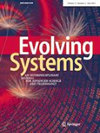
中科院 1區(qū) 期刊 JCR Q1 期刊 中科院 2區(qū) 期刊 JCR Q2 期刊 中科院 3區(qū) 期刊 JCR Q3 期刊 中科院 4區(qū) 期刊 JCR Q4 期刊Evolving Systems
SCIE國(guó)際簡(jiǎn)稱(chēng):EVOL SYST-GER 參考譯名:不斷發(fā)展的系統(tǒng)
主要研究方向:COMPUTER SCIENCE, ARTIFICIAL INTELLIGENCE 非預(yù)警期刊 審稿周期:
《不斷發(fā)展的系統(tǒng)》(Evolving Systems)是一本由SPRINGER HEIDELBERG出版的以COMPUTER SCIENCE, ARTIFICIAL INTELLIGENCE為研究特色的國(guó)際期刊,發(fā)表該領(lǐng)域相關(guān)的原創(chuàng)研究文章、評(píng)論文章和綜述文章,及時(shí)報(bào)道該領(lǐng)域相關(guān)理論、實(shí)踐和應(yīng)用學(xué)科的最新發(fā)現(xiàn),旨在促進(jìn)該學(xué)科領(lǐng)域科學(xué)信息的快速交流。該期刊是一本未開(kāi)放期刊,近三年沒(méi)有被列入預(yù)警名單。
- 4區(qū) 中科院分區(qū)
- Q3 JCR分區(qū)
- 74 年發(fā)文量
- 2.7 IF影響因子
- 未開(kāi)放 是否OA
- 6 issues per year 出版周期
- English 出版語(yǔ)言
Evolving Systems covers surveys, methodological, and application-oriented papers in the area of dynamically evolving systems. ‘Evolving systems’ are inspired by the idea of system model evolution in a dynamically changing and evolving environment. In contrast to the standard approach in machine learning, mathematical modelling and related disciplines where the model structure is assumed and fixed a priori and the problem is focused on parametric optimisation, evolving systems allow the model structure to gradually change/evolve. The aim of such continuous or life-long learning and domain adaptation is self-organization. It can adapt to new data patterns, is more suitable for streaming data, transfer learning and can recognise and learn from unknown and unpredictable data patterns. Such properties are critically important for autonomous, robotic systems that continue to learn and adapt after they are being designed (at run time).
Evolving Systems solicits publications that address the problems of all aspects of system modelling, clustering, classification, prediction and control in non-stationary, unpredictable environments and describe new methods and approaches for their design.
The journal is devoted to the topic of self-developing, self-organised, and evolving systems in its entirety — from systematic methods to case studies and real industrial applications. It covers all aspects of the methodology such as
Evolving Systems methodology
Evolving Neural Networks and Neuro-fuzzy Systems
Evolving Classifiers and Clustering
Evolving Controllers and Predictive models
Evolving Explainable AI systems
Evolving Systems applications
but also looking at new paradigms and applications, including medicine, robotics, business, industrial automation, control systems, transportation, communications, environmental monitoring, biomedical systems, security, and electronic services, finance and economics. The common features for all submitted methods and systems are the evolving nature of the systems and the environments.
The journal is encompassing contributions related to:
1) Methods of machine learning, AI, computational intelligence and mathematical modelling
2) Inspiration from Nature and Biology, including Neuroscience, Bioinformatics and Molecular biology, Quantum physics
3) Applications in engineering, business, social sciences.
Evolving Systems期刊信息
- ISSN:1868-6478
- 出版語(yǔ)言:English
- 是否OA:未開(kāi)放
- E-ISSN:1868-6486
- 出版地區(qū):GERMANY
- 是否預(yù)警:否
- 出版商:SPRINGER HEIDELBERG
- 出版周期:6 issues per year
- 開(kāi)源占比:0.0356
- Gold OA文章占比:5.48%
- OA被引用占比:0.0159...
- 出版國(guó)人文章占比:0.02
- 出版撤稿占比:0
- 研究類(lèi)文章占比:94.59%
Evolving Systems CiteScore評(píng)價(jià)數(shù)據(jù)(2024年最新版)
| CiteScore | SJR | SNIP | CiteScore 指數(shù) | ||||||||||||||||||||
| 7.8 | 0.746 | 1.022 |
|
名詞解釋?zhuān)?/b>CiteScore 是衡量期刊所發(fā)表文獻(xiàn)的平均受引用次數(shù),是在 Scopus 中衡量期刊影響力的另一個(gè)指標(biāo)。當(dāng)年CiteScore 的計(jì)算依據(jù)是期刊最近4年(含計(jì)算年度)的被引次數(shù)除以該期刊近四年發(fā)表的文獻(xiàn)數(shù)。例如,2022年的 CiteScore 計(jì)算方法為:2022年的 CiteScore =2019-2022年收到的對(duì)2019-2022年發(fā)表的文件的引用數(shù)量÷2019-2022年發(fā)布的文獻(xiàn)數(shù)量 注:文獻(xiàn)類(lèi)型包括:文章、評(píng)論、會(huì)議論文、書(shū)籍章節(jié)和數(shù)據(jù)論文。
Evolving Systems中科院評(píng)價(jià)數(shù)據(jù)
中科院 2023年12月升級(jí)版
| Top期刊 | 綜述期刊 | 大類(lèi)學(xué)科 | 小類(lèi)學(xué)科 | ||
| 否 | 否 | 計(jì)算機(jī)科學(xué) | 4區(qū) | COMPUTER SCIENCE, ARTIFICIAL INTELLIGENCE 計(jì)算機(jī):人工智能 | 4區(qū) |
中科院 2022年12月升級(jí)版
| Top期刊 | 綜述期刊 | 大類(lèi)學(xué)科 | 小類(lèi)學(xué)科 | ||
| 否 | 否 | 計(jì)算機(jī)科學(xué) | 4區(qū) | COMPUTER SCIENCE, ARTIFICIAL INTELLIGENCE 計(jì)算機(jī):人工智能 | 4區(qū) |
中科院 2021年12月舊的升級(jí)版
| Top期刊 | 綜述期刊 | 大類(lèi)學(xué)科 | 小類(lèi)學(xué)科 | ||
| 否 | 否 | 計(jì)算機(jī)科學(xué) | 4區(qū) | COMPUTER SCIENCE, ARTIFICIAL INTELLIGENCE 計(jì)算機(jī):人工智能 | 4區(qū) |
中科院 2021年12月基礎(chǔ)版
| Top期刊 | 綜述期刊 | 大類(lèi)學(xué)科 | 小類(lèi)學(xué)科 | ||
| 否 | 否 | 工程技術(shù) | 4區(qū) | COMPUTER SCIENCE, ARTIFICIAL INTELLIGENCE 計(jì)算機(jī):人工智能 | 4區(qū) |
中科院 2021年12月升級(jí)版
| Top期刊 | 綜述期刊 | 大類(lèi)學(xué)科 | 小類(lèi)學(xué)科 | ||
| 否 | 否 | 計(jì)算機(jī)科學(xué) | 4區(qū) | COMPUTER SCIENCE, ARTIFICIAL INTELLIGENCE 計(jì)算機(jī):人工智能 | 4區(qū) |
Evolving Systems JCR評(píng)價(jià)數(shù)據(jù)(2023-2024年最新版)
| 按JIF指標(biāo)學(xué)科分區(qū) | 收錄子集 | 分區(qū) | 排名 | 百分位 |
| 學(xué)科:COMPUTER SCIENCE, ARTIFICIAL INTELLIGENCE | SCIE | Q3 | 101 / 197 |
49% |
| 按JCI指標(biāo)學(xué)科分區(qū) | 收錄子集 | 分區(qū) | 排名 | 百分位 |
| 學(xué)科:COMPUTER SCIENCE, ARTIFICIAL INTELLIGENCE | SCIE | Q3 | 122 / 198 |
38.64% |
Evolving Systems歷年數(shù)據(jù)統(tǒng)計(jì)
影響因子
中科院分區(qū)
Evolving Systems中國(guó)學(xué)者發(fā)文選摘
-
1、Very deep fully convolutional encoder-decoder network based on wavelet transform for art image fusion in cloud computing environment
Author: Chen, Tong; Yang, Juan
Journal: EVOLVING SYSTEMS. 2023; Vol. 14, Issue 2, pp. 281-293. DOI: 10.1007/s12530-022-09457-x
-
2、A human activity recognition method using wearable sensors based on convtransformer model
Author: Zhang, Zhanpeng; Wang, Wenting; An, Aimin; Qin, Yuwei; Yang, Fazhi
Journal: EVOLVING SYSTEMS. 2023; Vol. , Issue , pp. -. DOI: 10.1007/s12530-022-09480-y
-
3、PDRF-Net: a progressive dense residual fusion network for COVID-19 lung CT image segmentation
Author: Lu, Xiaoyan; Xu, Yang; Yuan, Wenhao
Journal: EVOLVING SYSTEMS. 2023; Vol. , Issue , pp. -. DOI: 10.1007/s12530-023-09489-x
-
4、Temperature and humidity prediction of mountain highway tunnel entrance road surface based on improved Bi-LSTM neural network
Author: Tao, Rui; Peng, Rui; Wang, Hao; Wang, Jie; Qiao, Jiangang
Journal: EVOLVING SYSTEMS. 2023; Vol. , Issue , pp. -. DOI: 10.1007/s12530-023-09496-y
Evolving Systems同類(lèi)期刊
-
人工智能的工程應(yīng)用
Engineering Applications Of Artificial Intelligence
中科院 2區(qū) JCR Q1
-
智能與模糊系統(tǒng)雜志
Journal Of Intelligent & Fuzzy Systems
中科院 4區(qū) JCR Q3
-
網(wǎng)絡(luò)安全
Cybersecurity
中科院 4區(qū) JCR Q1

-
大數(shù)據(jù)雜志
Journal Of Big Data
中科院 2區(qū) JCR Q1
-
神經(jīng)計(jì)算
Neurocomputing
中科院 2區(qū) JCR Q1

-
信息技術(shù)與控制
Information Technology And Control
中科院 4區(qū) JCR Q3

-
物聯(lián)網(wǎng)
Internet Of Things
中科院 3區(qū) JCR Q1
-
大數(shù)據(jù)挖掘與分析
Big Data Mining And Analytics
中科院 1區(qū) JCR Q1

免責(zé)聲明
若用戶(hù)需要出版服務(wù),請(qǐng)聯(lián)系出版商:TIERGARTENSTRASSE 17, HEIDELBERG, GERMANY, D-69121。